Why Being5 min read
The Cosmic Mirror: Astrology, Being, and the Search for Purpose
 Soroush DehghanVedic Astrologer · London
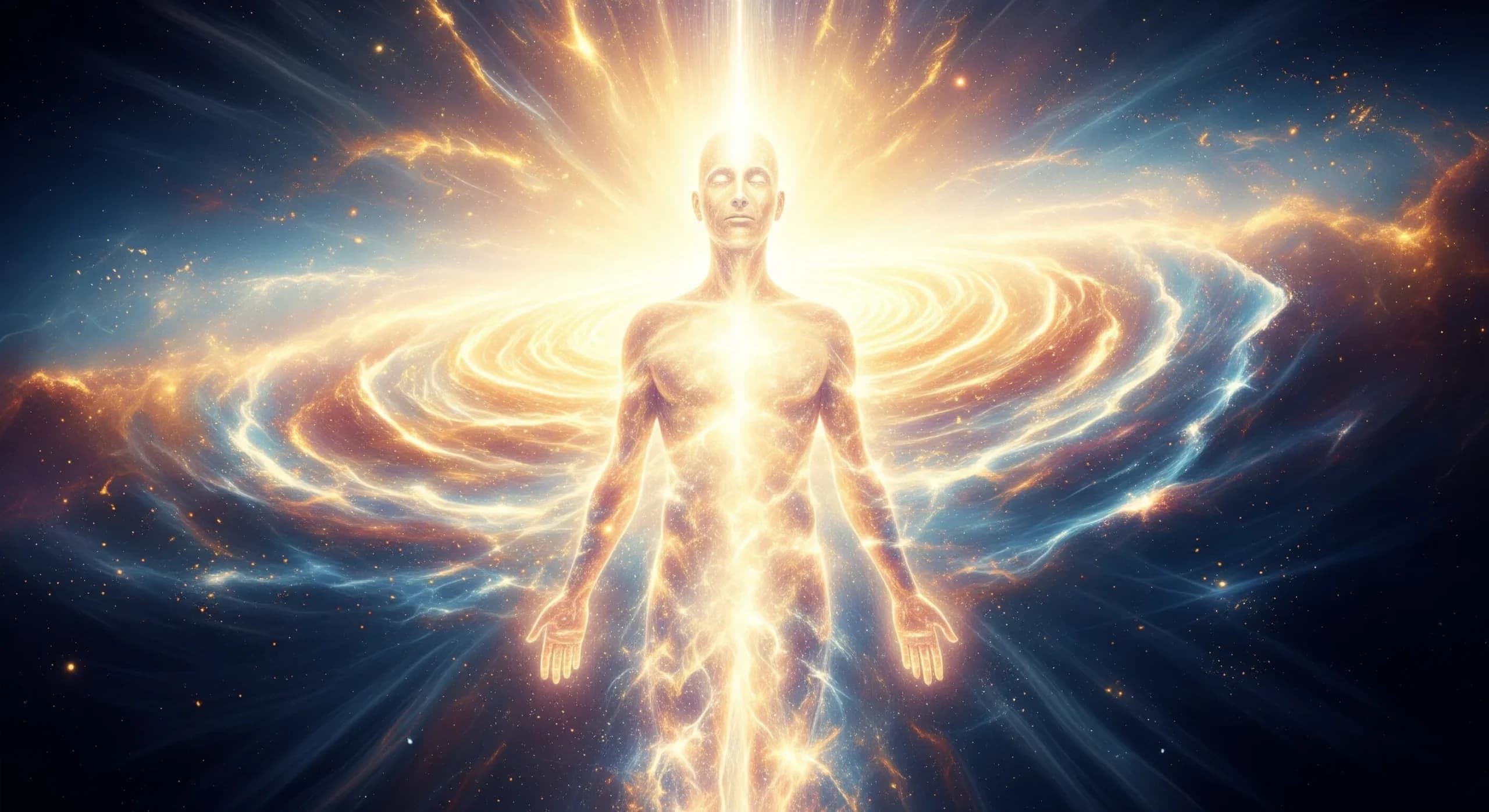
We live in an age that trusts data and experiments, and that's a good thing. But some of life's biggest questions don't fit in a lab. What does it mean to be? Why are we here, in this body, at this moment? These aren't abstract puzzles. They shape the choices we make, the people we love, and what we hope for. Vedic astrology, or Jyotish, has worked on these questions for thousands of years. It's more than a way to predict events. At heart, it's a way of understanding who we are: a mirror held up to our nature and our purpose.
Vedic astrology is often treated as fortune-telling, but it sits inside a much larger spiritual picture. The idea is simple. The moment you take your first breath, the positions of the planets leave a pattern on you. That pattern isn't a fixed fate. It's your starting point: the tendencies, talents, karmic challenges, and temperament you were born with. In a sense, your chart is the sky's answer to the question "Who am I?"
Being: who we are underneath
In Vedic philosophy, who you are goes deeper than your body, your thoughts, or your moods. At the core is the Atman, a spark of consciousness that is part of the universal consciousness, Brahman. Your birth chart is a symbolic map of how that spark has taken shape in this life. Each planet speaks to a part of you: your identity and vitality (Sun), your emotions and inner world (Moon), your drive and courage (Mars), your mind and communication (Mercury), your wisdom and good fortune (Jupiter), your relationships and creativity (Venus), and your lessons, discipline, and endurance (Saturn).
So when I read a chart, prediction is only part of the work. The bigger part is understanding the person. Why is one person naturally compassionate, while another can't stop striving? Why do some people meet the same obstacle again and again, while others seem to glide through life? The chart shows these differences clearly, along with the karmic patterns behind them. That's why it can be such a powerful tool for accepting yourself. Your strengths and weaknesses stop looking like flaws and start looking like parts of one design: yours.
Why we're here: purpose, karma, and growth
If the chart shows who we are, the next question is why. From the Vedic point of view, no life is random. We're born into particular circumstances, with a particular chart, to learn particular lessons, carry out our duty (dharma), and slowly grow toward greater awareness and freedom.
This is where karma comes in. Everything we do, think, and say leaves a mark, a seed, and those seeds carry across lifetimes. This life, and the chart we were born with, is how those seeds come to fruit. The hard parts of a chart aren't punishments. They're lessons fitted to us. The gifts in a chart are the tools we've been given to live out our dharma. And the deepest "why" is to go through these experiences, learn from them, and move toward moksha: freedom from the cycle of birth and rebirth, and union with the divine.
Seen this way, astrology becomes a guide rather than a forecast. Once you understand where your chart is strong and where it's tested, you can work with it on purpose. If Saturn brings delay, you learn patience and discipline. If Venus brings trouble in love, you learn to love with less fear and more empathy and forgiveness. Your chart lays out your soul's curriculum: why certain things keep happening to you, and how to meet them with more awareness.
A chart of perfection: every planet exalted
Now imagine a chart that could almost never exist, one where every major planet sits in its sign of exaltation. In Vedic astrology, exaltation (uttama) is where a planet is at its strongest and most generous, like a king on his own throne, free to give his best.
A chart like this is so rare that it's practically impossible in the real movement of the planets. It doesn't describe an ordinary life. It's an ideal, a picture of what I'd call perfect being.
What would that person be like?
- In complete harmony: Mind, heart, drive, intellect, wisdom, love, and discipline would all be working at their best, together. No inner conflict, no unfinished tension.
- Living their dharma naturally: Doing the right thing would come without effort, and their actions would serve everyone around them.
- Fully self-realized: They would know, without doubt, who they truly are and why they're here, free of ego and illusion.
- Wise and compassionate: With every planet at its best, they would have deep intuition, boundless love, and a real understanding of their place in the world.
- A picture of our potential: This chart shows where every soul is heading over many lifetimes: past its karmic limits, toward freedom, peace, and union with the Absolute.
This ideal isn't meant to make anyone feel inadequate. Quite the opposite. It's a reminder that the seeds of these qualities are in all of us. None of us has every planet exalted, but each of us can work toward the best version of the chart we were given, with more harmony, wisdom, and purpose.
Conclusion: living your chart, one breath at a time
Vedic astrology isn't fortune-telling. It's a philosophy that takes on two of life's oldest questions: "Who am I?" and "Why am I here?" It's a map of who you are and a guide for how you can grow. The almost mythical chart with every planet exalted shows what perfect being might look like: complete harmony, clear purpose, and full self-realization.
When you look closely at your own chart, you're invited to live more consciously: to follow your own dharma, to learn from your karma with open eyes, and to keep growing. Step by step, you come closer to your highest potential, one conscious breath and one purposeful choice at a time.